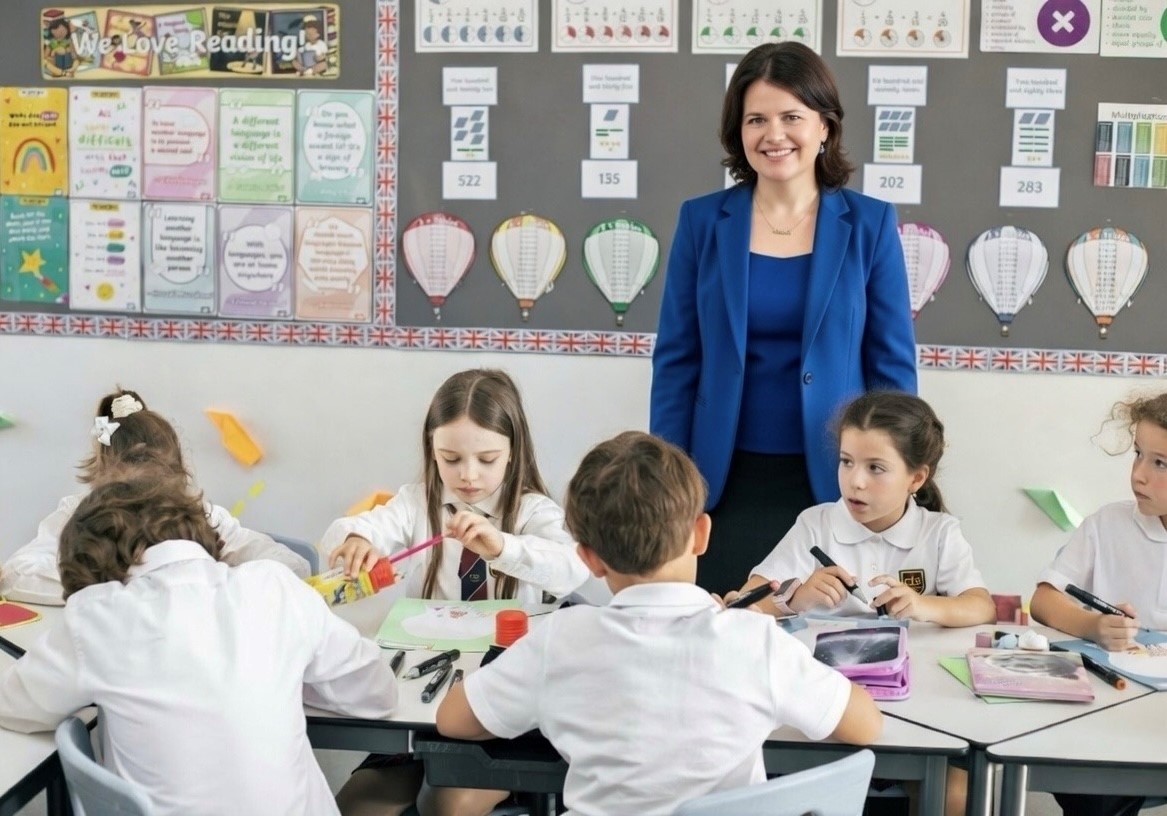
My name is Ms. Danielle, and I am the Head of the International Early Years Programme at the Gorki Campus of CIS International School. Every day I work with children from the age of two, and I see how these early years shape the foundation of their future: from emotional intelligence, confidence, curiosity, and a positive attitude towards learning.
Today, almost every second private kindergarten claims to offer an English focus. However, there is a significant difference between a nursery with a few English lessons and a truly bilingual kindergarten. In this article, I will explain what parents should genuinely look for and how to choose the right environment, not just an attractive label.
Bilingual kindergarten: what it really means
An English kindergarten is not two English lessons per week. It is an environment where English becomes a natural tool for communication.
In a genuine bilingual setting:
• A native-speaking or international teacher communicates with children in English throughout the day
• English is used during play, outdoor activities, creative sessions, and even mealtimes
• Children acquire vocabulary through action and real-life interaction, rather than memorisation.
We follow a language separation principle: the English-speaking teacher communicates in English, while the Russian-speaking tutor supports adaptation and the development of Russian language skills. This approach allows children to build two language systems safely and confidently.
That is why CIS bilingual kindergarten provides full immersion rather than functioning as an “English club”.
Three foundations of a supportive environment: safety, development, language
Safety and gentle adaptation
Without a sense of security, a child cannot truly develop.
At our Gorki Campus:
• The territory is secured 24/7
• Access is controlled through a pass system
• Groups are small, with up to 15 children
• Three adults work in each group: an international programme teacher, a Russian-speaking teacher, and a nanny
• Balanced meals are provided 4–5 times a day, taking into account individual dietary needs.
Adaptation takes place gradually. We closely monitor each child’s emotional wellbeing and involve a psychologist if necessary. Discipline is based on respect and explanation rather than pressure.
“Early Years” methodology: national standards + international programme
Our private kindergarten with English language combines the Russian Federal Early Years Standards (FGOS) with the international Early Years programme.
The development programme nurtures:
• thinking and speech
• social skills
• initiative and independence
• 21st-century skills such as communication, creativity, and critical thinking.
We implement internationally recognised methodologies:
• Inquiry-based learning - encouraging children to explore and ask questions;
• Project-based learning;
• Elements of the Reggio Emilia approach, where the child is an active researcher and the teacher acts as a partner;
• Jolly Phonics to support early reading skills;
• Total Physical Response - learning through movement and action.
At this age, the key goal is to preserve natural curiosity and help children enjoy the process of discovery.
English as an environment, not a subject
In our English kindergarten, the language is embedded into the daily routine.
We never force speech. Bilingual children naturally experience a “silent period” - a stage of quiet language absorption. During this time, the child listens actively and builds internal language structures.
A common parental concern is: “Will my child mix the languages?”
Code-switching is a normal stage in bilingual development. With the right methodology, languages gradually separate and stabilise.
We track each child’s progress through an individual learning portfolio and regularly discuss development with parents.
Full-day kindergarten: a structured daily routine
A clear daily structure provides children with stability and emotional security.
8:00-8:30 Arrival, gentle start to the day and breakfast
8:30-9:10 Continuous provission
9:10- 9:50 English, circle time, date welcoming songs
9:50- 10:30 Math, learning through physical touch and activities
10:30- 11:00. Snack
11:00-12:20 Thematic activity (Art, Science, Music, Creative Exploration).
12:20-13:00 Outdoor play on the secured campus grounds.
13:00 Lunch.
13:30-14:50 Rest time. Sleep is optional: some children sleep, others engage in calm activities.
15:25-15:45 Afternoon snack.
15:45-16:30 After school Clubs and free play.
Each time block has a clear educational purpose: language development, independence, emotional regulation, and cooperation skills.
How to distinguish a true bilingual kindergarten from “English-Led” marketing
During your visit, consider asking:
1. Who works with the children? Do teachers hold relevant degrees and international certifications?
2. How is English immersion organised throughout the day?
3. How is the adaptation process structured?
4. How is each child’s progress monitored?
5. What is included in the fees, and what is charged separately?
6. How is physical security ensured?
7. How does the school communicate with parents?
Transparency is the strongest indicator of a professional approach.
Common parental concerns: honest answers
“Will my child mix the languages?”
This is a normal stage in bilingual development. Over time, language systems naturally separate.
“What if the native teacher leaves?”
Our methodology does not depend on a single individual. A structured system and a professional team ensure continuity.
“My child is shy - will they speak?”
We never pressure children to speak. Through play, movement, and collaborative projects, language emerges naturally and confidently.
Why families choose CIS
• International Early Years programme
• Full English immersion
• Small group sizes
• 24/7 security
• Full-day kindergarten provision
• Seamless transition to CIS International School.
Our Early Years programme is embedded within the wider CIS Education Group structure, ensuring continuity and smooth progression to international academic pathways.
Conclusion: choosing the right environment is a strategic decision
When selecting a private kindergarten with English language, you are not simply choosing a timetable or meal plan. You are choosing an environment, a philosophy, and the adults who will support your child during the most formative years of their development.
I warmly invite you to a personal meeting at our Gorki Campus. We will discuss early childhood development, the stages of bilingual language formation, and identify the most suitable pathway for your child.
The best way to understand whether CIS English kindergarten is the right fit is to see it in action and ask your questions in person.