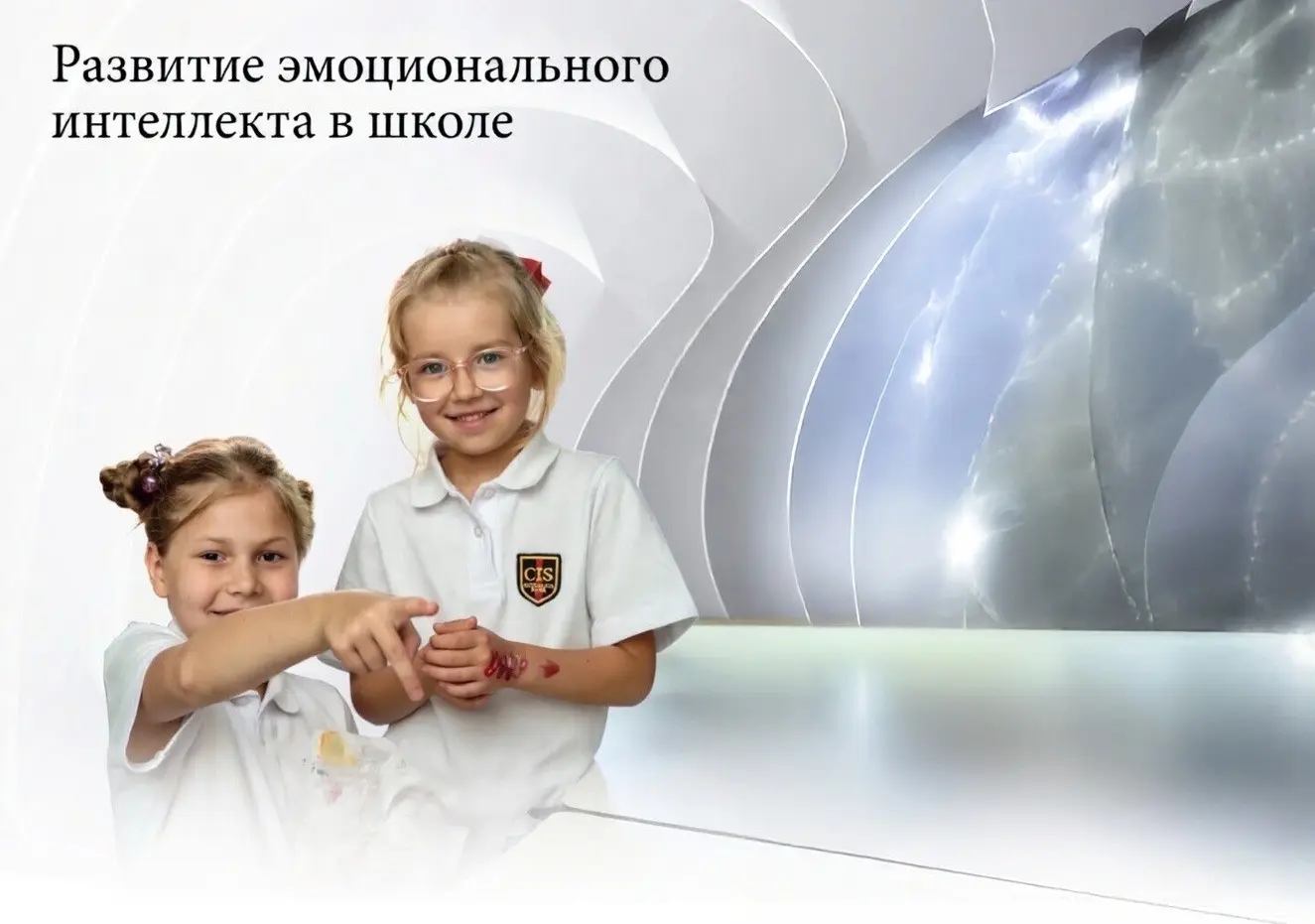
Every adult knows how important it is to develop emotional intelligence, but how do you explain to a child what is happening to their feelings? The early years are a time when a child discovers the world and begins to understand themselves. Perhaps nothing is more important than learning to recognise one’s own emotions and those of others.
At our Gorki Campus, a team of specialists - speech therapist Ms Anna, psychologist Ms Olga and Art teacher Ms Alexandra - created a unique project to do exactly that: “Emotional Stories.”
It all began with a series of original stories about basic emotions by Elena Ulyeva:
Why am I angry? Why am I scared? Why do I feel shy? Why am I upset? Why am I sad? Why am I jealous? Why do I feel ashamed?
Seven themes, seven important conversations.
Students from Year 1, Year 2A and Year 2B became the main characters in this journey. But simply reading stories did not feel engaging enough - so we turned emotions into a full creative experience, bringing them to life through storytelling, art and even animation.
Stage 1. Navigating Feelings
Together with Ms Olga, students explored the world of basic emotions, supported by the book The Colour Monster. During individual sessions, they discussed what joy, sadness, anger, fear, love and calm look like, when these feelings arise, and how to manage more challenging emotions.
Each child created a personal notebook and an “emotion thermometer” - a simple yet powerful tool to recognise when feelings intensify and to respond more consciously.
Stage 2. Deep Exploration
With Ms Anna, students learned to “read between the lines”. Through guided questions, they experienced stories alongside the characters, developed empathy and learned to anticipate emotional responses.
— Why was the little hare scared?
— How would you feel in that situation?
Children began to describe emotions through metaphors - for example, anger as a “fire inside” - and explored cause-and-effect relationships in behaviour.
Stage 3. Embodying Emotions
Students then explored how emotions are expressed physically. Through posture, gesture and breathing, they learned how feelings show up in the body — and how to regulate them.
Stage 4. Language and Expression
With Ms Anna, students developed more precise and expressive language. They discovered that emotions can be described in many ways: a character is not just angry, but perhaps furious and practised conveying emotions through tone and voice.
They retold stories, discussed characters’ actions and learned to express their thoughts clearly and coherently.
Stage 5. Visual Interpretation
With Ms Alexandra, students translated emotions into visual form. They explored colours, created storyboards and brought characters to life through drawing and movement.
Stage 6. Bringing Stories to Life
And then came the magic: the drawings came alive. Using AI tools, characters gained movement and facial expressions. Students recorded their own voices for the characters, carefully conveying emotions through intonation, while technology helped refine the sound and assemble the final films.
One of the animations was even created in English combining emotional development with language learning.
The Outcome
The final result was a collection of animated films “Emotional Stories”, each one reflecting a child’s deep engagement with understanding emotions.
The project culminated in a school Assembly, where students proudly presented their work to parents and peers, sharing not only their creations but their learning journey.
The project received a strong response within the CIS Gorki community and became a powerful example of how psychology, art and technology can come together in education.
It is precisely these kinds of practical, real-life cases that are shaping today’s professional dialogue around emotional intelligence in schools.
On 8 April 2026, CIS International School (Skolkovo Campus) will host a scientific and practical conference:
“Developing Emotional Intelligence in an International School: Theory and Practice”
The conference will bring together students, educators, parents and international experts for an open dialogue on how emotional intelligence impacts academic achievement, personal wellbeing and effective interaction in today’s world.
Participants will:
• hear from leading experts in psychology and education;
• gain insights from international teachers working across different countries;
• take part in a panel discussion on key challenges and opportunities in developing emotional intelligence;
• engage in meaningful networking and exchange of experience.
The conference has a strong practical focus - on empathy, self-regulation, conscious communication and emotional resilience, all of which are becoming essential competencies in modern education.
All participants and speakers will receive certificates, and selected papers will be published.
Date: 8 April 2026
Format: Online
Registration deadline: 1 April (registration is required)
Register here: via the link
If you believe that education begins with understanding emotions, we would be delighted to welcome you.