How children develop an interest in learning
In the early years of school, children begin to take their first independent steps in learning. During this time, they start to realise that lessons can be engaging. They ask questions, try new things and gradually build confidence in their abilities.
When choosing a primary school programme, parents look beyond subjects and textbooks. They want to understand the environment their child will be part of, how they will feel in the classroom and whether their natural curiosity will be supported.
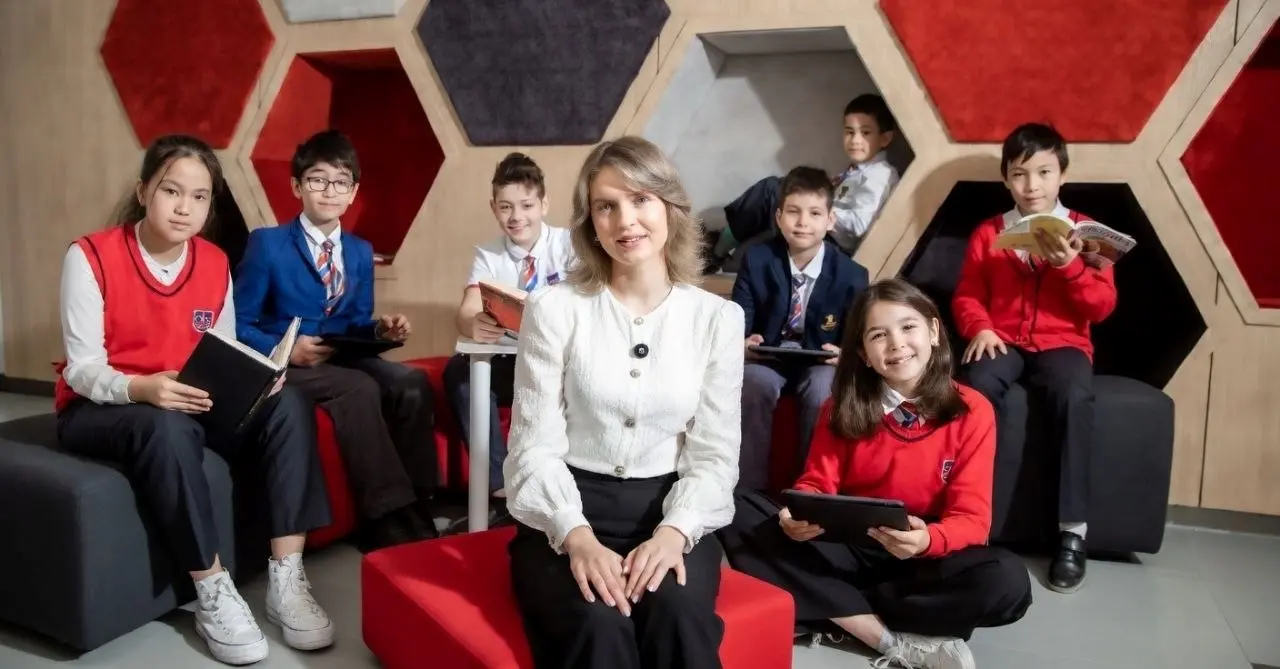
My name is Ms Teya, and I lead the Primary Programme at CIS Gorki. I, together with our teaching team, understand that every child comes to school with their own character, interests and mood. Each child has their own strengths, preferences and pace. Some enjoy reading and sharing their thoughts, while others prefer to observe quietly.
There are no right or wrong ways to be. The role of the school is to create an environment where each child feels comfortable and confident, can be themselves, try new things and is not afraid to make mistakes.
In this article, I will explain how the Primary Programme at CIS is structured, the principles behind our international approach to learning, and what a typical school day looks like.
How the programme is structured and what children learn
At the core of the programme are key academic skills: reading, writing, mathematics and English. Alongside these, children explore a wider range of subjects, with critical and scientific thinking woven throughout. These disciplines are not taught in isolation; rather, they are all interlinked, working together to shape and mould a child's knowledge into a cohesive whole.
In primary school, students study science, art, music, technology and digital skills, and take part in activities that support communication and emotional development.
How learning works in practice
Each class is supported by two teachers. The lead teacher is a native English speaker, while the second teacher is fluent in both English and Russian and provides support throughout the lesson.
Together, they closely monitor each child’s understanding, stepping in whenever additional support is needed. For example, during a maths lesson, the teacher sets a task and allows time for individual thinking. Each student writes their answer on a small board and holds it up, giving the teacher immediate insight into their progress.
The second teacher observes the responses, identifying who has grasped the concept and who may need further explanation. The teacher can then choose to revisit the topic with the whole class or work with a small group.
With small class sizes of up to 15 students, this approach makes it possible to notice each child’s progress during the lesson and respond right away.
This is known as early intervention. It is the practice of spotting and supporting children's learning needs as soon as they appear. It is highly effective because it tackles challenges early, when children are most adaptable, preventing gaps from growing and ensuring every child builds a solid foundation for future learning.
If you would like to see how this works in practice, you can explore the Primary Programme page, where you will find videos, examples of the school day and a detailed overview.
How the programme develops thinking
At CIS, we recognise that information is widely available. What matters is how children use it: asking questions, checking, comparing and forming their own conclusions.
As noted by Christine Ozden, Global Director of Cambridge International Programmes:
“Education is about more than simply acquiring knowledge. It is about developing the skills, attitudes and understanding that learners need to thrive in a changing world. Programmes such as Cambridge Primary help children become confident, responsible, reflective, innovative and engaged learners.”
Within the programme, children regularly engage with tasks that require independent thinking. They discuss, suggest ideas, explain their reasoning and listen to others.
Project work is an important part of learning. It helps maintain interest and makes knowledge meaningful in practice.
For example, at CIS Gorki, students in Years 3 to 7 worked on a project called “The City and Its People” together with their Art teacher, Ms Elena. They designed a city, decided what places it would include and who would live there.
Through this project, children explored how different people live together. They reflected on character, interests and experiences. While creating their characters, they used elements from their own observations and personal experience. This helped them better understand themselves and others. Over time, they began to recognise that differences allow people to complement one another, and that collaboration helps build strong partnerships and achieve shared goals.
Such projects support children in expressing ideas, recognising connections, making decisions and applying knowledge in real-life contexts.
Frequently Asked Questions
How do you know that a child has understood the material
Teachers use a combination of ongoing assessment strategies to know when a child has truly understood the material. It's not just about the final answer—it's about the thinking behind it. The teacher looks for children who can explain their reasoning in their own words, apply a concept to a new situation, or teach it to a peer. Our small class sizes and two-teacher model mean we can observe these moments of understanding as they happen, rather than relying solely on tests or worksheets.
How do children adapt to a new school
In the first weeks, children gradually adjust to the routine, lesson structure and classmates. The teacher supports them in becoming comfortable and engaged in learning.
A school psychologist is also involved, observing the process and offering support when needed.
Each child is supported by a classmate through a “buddy” system, helping them understand the school day and feel more confident in a new environment.
How does English develop in primary school
Children hear English throughout the day, not only in lessons but also during breaks, lunchtime and outdoor activities. Over time, they begin to understand, respond and use the language naturally.
Additional ESL sessions in small groups are part of the programme. These provide targeted support for children who need more time to develop language skills.
How do you maintain interest in learning
We believe that children learn best when they are genuinely curious, not just passively receiving information. Teachers maintain interest by making learning active and meaningful - connecting lessons to real-world contexts, giving children choices in how they explore a topic, and varying activities to suit different learning styles. With two teachers in every class, we can respond to children's interests as they emerge, following their questions and adapting our approach to keep engagement high. When children feel their ideas matter and see purpose in what they're learning, their natural curiosity becomes the driving force.
For example, in the project “The City and Its People”, children contributed their own ideas, developed characters and explored how people interact. Each child could see how their input shaped the overall project. Conclusion
Primary school is a formative period when a child's attitude toward learning begins to take shape. It is essential that during these years, children develop not only strong foundational skills but also the ability to think critically, ask thoughtful questions, and seek out answers.
At CIS, our programme is carefully designed to guide children into becoming active participants in their own learning - building their confidence along the way and ensuring they can see the meaningful results of their efforts.
Trial Day
We invite your child to join a trial school day at CIS.
They will spend the day in class, meet teachers and classmates, take part in lessons and experience the school routine.
Afterwards, you will receive feedback from the teacher to help you understand whether this environment is the right fit for your child.