Every parent wants a strong future for their child. In 2026, choosing a school has become one of the most complex strategic decisions a family can make. A strong Russian school or an international one? A focus on traditional academic rigour or on fluent English and global opportunities? How do you protect a child from a toxic environment or bullying? How do you motivate a teenager to learn with genuine interest rather than pressure? And which skills will truly matter in a world shaped by artificial intelligence - critical thinking, leadership, the ability to collaborate?
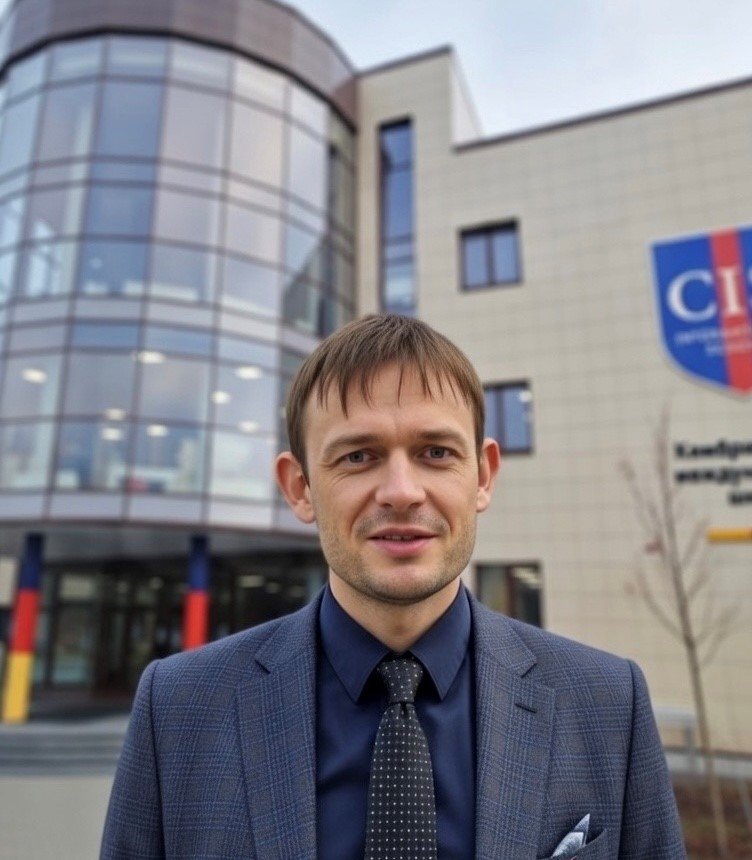
My name is Christopher Kingshott, and I am the Head of CIS International School, Gorki Campus. For more than seventeen years I have worked in international education, and I firmly believe that the school of the future is not a compromise between “Russian” and “international” systems. It is a carefully designed environment where two programmes complement one another, where adaptation is thoughtful and structured, where early career guidance begins naturally, and where 21st-century skills are developed consistently. In such a setting, English becomes a working academic tool, lessons are engaging, and a culture of respect builds confident young adults.
What an International School Education Really Offers
Parents often say quite simply, “We want strong English.” Yet fluent English is only the beginning. A well-established international school provides four fundamental advantages.
First, a genuine language environment. When a child learns alongside native speakers and uses English daily in academic contexts, it stops being just another subject. It becomes the language of thought for analysing texts, writing essays, and presenting projects.
Second, an internationally recognised qualification. The A-Level programme is accepted by universities worldwide and is a transparent academic standard understood by admissions teams.
Third, the development of critical thinking. In a rapidly evolving world shaped by artificial intelligence, success depends less on memorising facts and more on analysing, comparing and forming independent arguments.
And finally, a strong university portfolio: research projects, advanced subject study, and academic achievements that demonstrate depth and commitment.
Choosing a programme: an expert perspective
Globally, three main international pathways are widely recognised.
The IB Diploma* is a two-year programme covering six subjects and an extended research component. It suits academically broad students with strong organisational skills.
A-Level involves in-depth study of three or four subjects over two years before graduation. It is ideal for students who already have a clear direction: economics, engineering, medicine, law, IT. Universities value A-Level for its academic depth and transparent assessment system.
The American High School Diploma with AP follows the US model and includes Advanced Placement subjects. It is often chosen by families focusing on university entry in the United States.
In the Russian context, however, A-Level remains the most stable and clearly structured academic pathway. In 2026, it is the programme most commonly offered by international schools across Russia.
How to choose the right International School
When parents ask me how to choose an international school, I advise them to look beyond the façade and examine the system as a whole.
Primary school is the stage at which a child develops confidence and an attitude towards learning. It is essential to create an environment where pupils feel comfortable, supported and intellectually curious. The extent to which a child enjoys learning, collaborates successfully and feels unafraid to make mistakes has a lasting impact on future decision-making and independence.
In secondary school, the focus shifts to autonomy and leadership. Teenagers must learn to make decisions, manage their time and take responsibility for outcomes.
A strong international school should therefore aim to:
• build a competitive portfolio for entry to leading universities in Russia and abroad
• prepare students for IGCSE and AS/A-Level examinations
• develop leadership qualities, initiative and responsibility
• cultivate critical thinking and confident argumentation
• ensure fluent academic use of English
• encourage teamwork and project management in an international context
• support informed university and career choices
Tuition Fees
In 2026, the average annual tuition fee for international schools in Moscow ranges between 2 and 3 million roubles, with an additional enrolment fee. Fees typically include the international academic programme, selected extracurricular activities, textbooks, learning materials and meals. Examination fees and certain optional activities may be charged separately.
Alternatives and long-term outlook
There are, of course, alternative pathways. Some families choose a strong Russian school supplemented by language courses and private tutoring. Others consider online programmes with international accreditation or boarding schools abroad. For certain circumstances, these may be well-considered solutions.
However, a structured international model offers one decisive advantage - continuity. Academic culture, confident English usage and independent study skills develop gradually from an early age rather than being added later in fragmented form. According to international statistics, A-Level graduates successfully enter universities ranked in the global top 100: in Russia, the United Kingdom, Canada and across Europe.
Alumni Stories
Alina, a graduate of CIS International School (St Petersburg campus), now studies in the United Kingdom:
“I transferred to CIS after Year 9 when I realised I wanted to study abroad. My English was not yet strong enough, so I needed a school where I could improve steadily and adapt to a new academic system. I looked at several options, but CIS felt right. Studying both the international and Russian programmes was important for me and for my parents - they wanted me to preserve the academic foundation I had built.”
Gleb, a graduate of the Skolkovo campus, shares:
“I want to work in biomedical engineering to develop technologies that improve quality of life for people with disabilities. School prepared me for that path. The biggest advantage was having two programmes that approached the same subjects differently. In physics, for example, the international programme focused on understanding concepts and phenomena, while the Russian programme strengthened our ability to apply formulae and solve complex problems. Together, they created a complete academic picture.”
Frequently Asked Questions
Is international school education suitable for entry to Russian universities?
Yes. When combined with the Russian curriculum, graduates successfully enter institutions such as Moscow State University, MGIMO and the Higher School of Economics.
At what age is it best to begin?
The international programme may begin from age 2.5. The earlier academic English, collaboration skills and critical thinking develop, the stronger the long-term outcomes.
How demanding is A-Level?
A-Level requires focused subject selection and independent study. It offers deep academic preparation aligned with university standards.
Is it possible to transfer from a Russian school?
Yes. During the admissions assessment, we determine a student’s academic starting point, level of English, interests and long-term goals. A clear adaptation pathway is then created, building upon the student’s existing subject knowledge and gradually transitioning it into the international framework.
Conclusion
If you are genuinely looking for a school where your child will grow confident, independent and academically strong, I invite you to visit the flagship CIS Gorki Campus.
Meet me personally. Speak with our teachers. Observe lessons and see our teaching methods in action. An educational environment cannot be fully described, it must be experienced.
I would be delighted to welcome you and discuss your child’s future in person.
*IB - considered undesirable in the Russian Federation